-
Special Music Sunday featuring Joseph Haydn’s Missa Cellensis in C, HOB. XXII “Mariazellermesse”
 Beth Welty, violin; Edward Wu, violin; Noralee Walker, viola; Harel Gietheim, cello;
 Susan K. Navien; Amy Dancz; Peter Owens; Steven Lauterwasser, soloists
First Congregational Church, Winchester: Sunday, June 7, 10:00 am
Please join us on Sunday, June 7 at 10:00 am. for First Congregational Church’s annual Special Music Sunday – where the choir, orchestra, and soloists offer a major work during the worship service.
- When: Sunday, June 7, 2026, at 10:00 am
- Where: The Sanctuary at 21 Church Street, Winchester, MA, 01890.
About Joseph Haydn and Missa Cellensis in C.
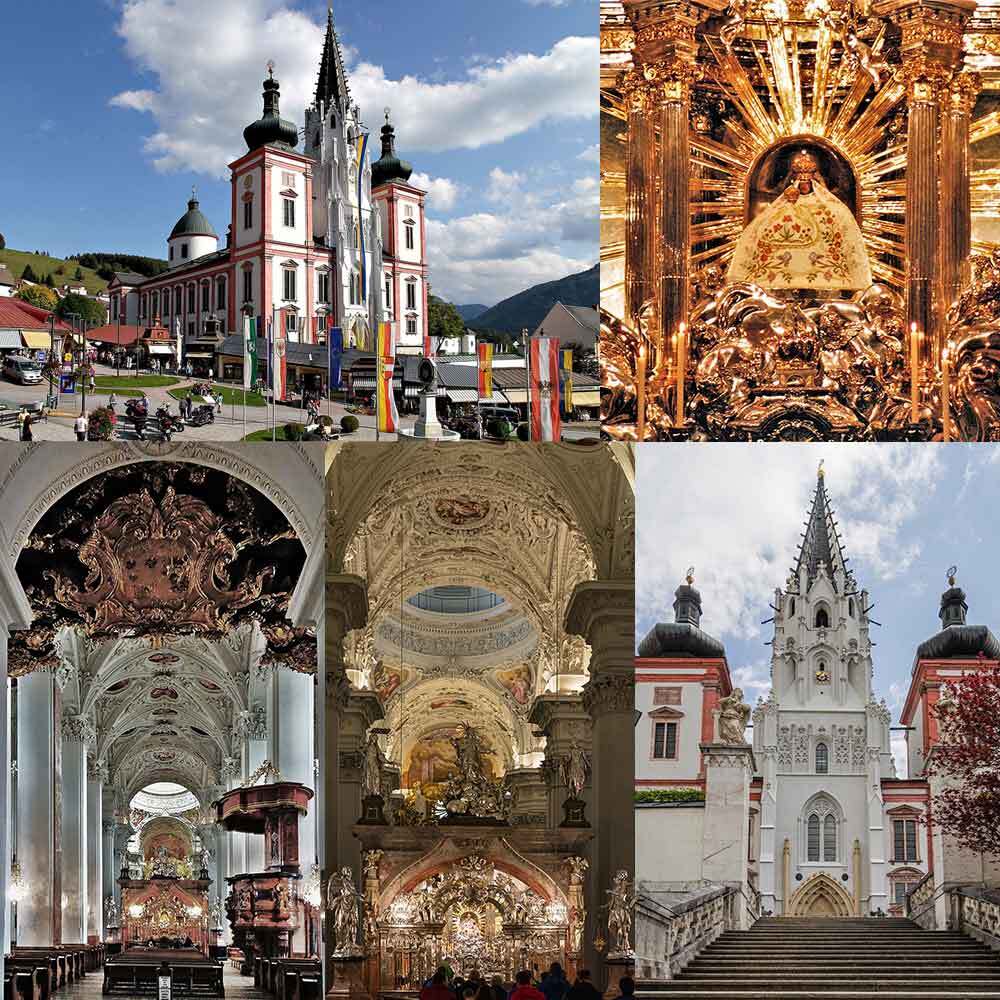
The Missa Cellensis, Hob. XXII:8, is a Mass in C major composed by Joseph Haydn in 1782, renowned as one of his most vibrant sacred choral works from the Classical period. Also known as the “Mariazeller Messe,” it takes its title from the pilgrimage site of Mariazell (Latinized as Cella) in Styria, Austria, a major pilgrimage destination honoring the Virgin Mary that Haydn himself visited in his youth. Scored for four vocal soloists (SATB), mixed chorus (SATB), and orchestra, the mass exemplifies Haydn’s mastery of festive, resplendent scoring in the Austrian church music tradition.
This work occupies a pivotal place in Haydn’s oeuvre, bridging his four earlier masses from 1766–1772 (composed largely for personal fulfillment during his early Esterházy tenure) and the six grand late masses of 1796–1802 (written after his return from London). The autograph manuscript is inscribed “Missa Cellensis. Fatta per il Signor Liebe de Kreutzner” – indicating it was likely created for or commissioned by Anton Liebe von Kreutzner, a retired military officer and ennobled Viennese official who supported pilgrimages to Mariazell.
The mass unfolds in movements following the Ordinary of the Mass: Kyrie (Adagio–Vivace, in sonata form with a developmental Christe eleison), Gloria (Allegro con spirito), Sanctus (Adagio–Allegro), Benedictus (Allegretto in G minor, adapted from Haydn’s 1777 opera Il mondo della luna with Baroque-style dotted rhythms evoking mystery), and Agnus Dei (Adagio in C minor–Vivace, culminating in an intricate, lengthy fugue on Dona nobis pacem).
Notably, the Missa Cellensis shares its title with an earlier Haydn mass, Hob. XXII:5 from 1766 (also called Missa Cellensis in honorem Beatissimae Virginis Mariae or the Cecilia Mass), both drawing on the Mariazell association amid Austria’s rich pilgrimage culture. The premiere location is uncertain, but the mass was likely composed for a performance associated with Mariazell pilgrimages, possibly at the basilica itself in 1782. The mass punctuates Haydn’s blend of polyphonic learning, operatic flair, and triumphant C-major exuberance, making it a testament to his innovative approach to liturgical music.